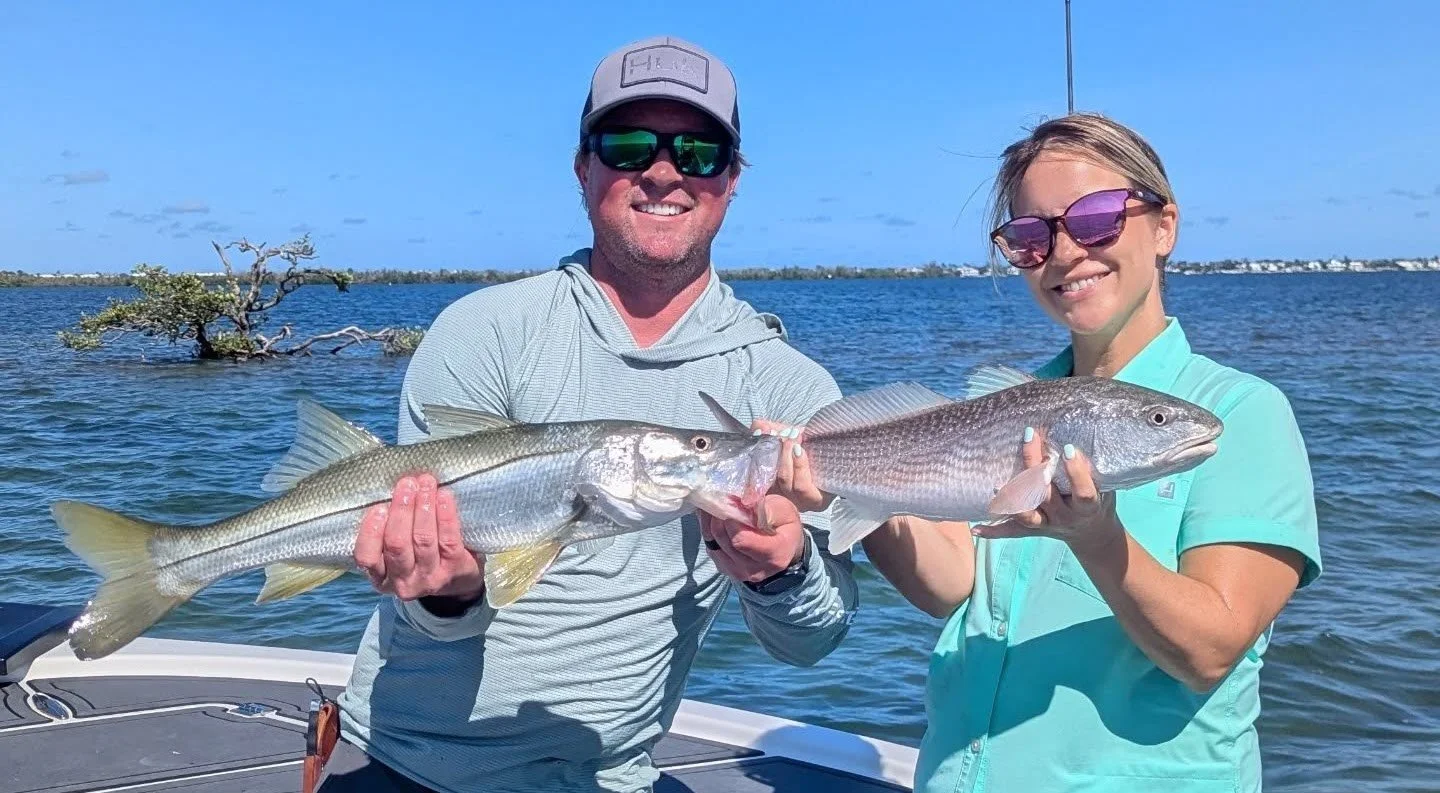
May is the transition from broad spring inshore fishing to full big-fish season in Fort Myers, Sanibel, and Captiva. Tarpon becomes the primary headline, snook and redfish feed harder around mangroves and passes, trout remains the highest-volume inshore option, and nearshore structure adds mackerel, tripletail, sharks, snapper, and permit when wind allows. This guide solves trip selection, tide selection, and tackle selection for anglers who want May patterns defined before they leave the dock. Expect the highest bite volume on trout and mixed inshore trips, the highest average fish size on tarpon and shark trips, and the best results from intermediate anglers who can follow precise boat positioning and bait presentation.
What Controls May Fishing
Bottom line: May splits into three separate fisheries: migratory tarpon, inshore predators, and nearshore mixed-bag structure fish. The correct plan depends on tide phase, bait presence, wind direction, and whether the crew wants numbers, size, or technical big-fish work.
KingFisher Charters already separates this fishery the right way with dedicated inshore, nearshore reef and wreck, and tarpon and shark trips. That matches the seasonal biology. Spring baitfish movement improves feeding for snook, redfish, trout, flounder, and black drum, while the strongest tarpon window on the site runs from May through July and the nearshore program targets species such as grouper, snapper, permit, and more.
| Variable | Typical May Read | Fish Response | Adjustment |
|---|---|---|---|
| Water temperature | Stable mid-70s into low-80s | Tarpon migration stabilizes, snook feed longer, trout hold shallower early | Start low light for inshore fish, then shift to passes, beaches, or nearshore lanes as heat builds |
| Tide phase | Incoming water on mangroves, major moving water in passes | Snook and redfish push tight to cover, tarpon hold on pressure edges, bait compresses on seams | Match the trip type to the tide window instead of fishing one area through dead water |
| Wind | Light morning easterly or variable breeze, stronger southwest sea breeze by afternoon | Beach lanes and nearshore water fish clean early, protected shorelines improve later | Start open water when possible, then finish protected or commit to inshore when the forecast is already dirty |
| Bait presence | Pilchards, threadfins, crabs, and glass minnows concentrated around passes, beaches, shorelines, and reefs | Predators feed on defined travel lanes instead of roaming randomly | Do not stay where forage is absent; relocate until bait is visible, marked, or pushed by current |
Operational priority: Build the day around one primary fishery, then keep one secondary option ready. A tarpon trip can downgrade into sharks when big fish slide deep. An inshore trip can pivot from mangrove snook to grass-flat trout. A nearshore run can rotate from mackerel feeds to tripletail or bottom fish without changing the boat or the tackle class.
- Highest ceiling: Tarpon in passes, bridge approaches, and beach travel lanes.
- Highest catch consistency: Trout, snapper, and mixed inshore fish on moving water.
- Best technical inshore target: Snook on bait-rich mangrove edges, pass current, and dock shade.
- Best weather hedge: Protected mangroves, river edges, and shorelines when afternoon wind ruins open-water drifts.
Four May Patterns That Produce
Bottom line: May rewards four repeatable patterns. Pick the one that matches tide, wind, and crew skill, then fish it precisely instead of sampling random water.
Pass Tarpon on Controlled Drifts
May tarpon fishing is a tide-control problem first and a bait problem second. The best program is a moving-water drift through passes, bridge approaches, and beach travel lanes once pass tarpon migration timing lines up with clean bait concentration and fish showing on the surface or suspended on the edge.
- Fish 15 to 35 feet in passes and bridge approaches, and 8 to 20 feet on beach lanes and nearshore tarpon water.
- Best water temperature window is roughly 75 to 82 degrees with stable overnight conditions.
- Free-line live crabs, threadfins, or mullet on 60 to 80 pound leader with 6/0 to 8/0 circle hooks.
- If tarpon slide deep, stay in the same bait lane and upgrade leader strength for sharks rather than abandoning the area too early.
Mangrove Snook and Redfish on Higher Water
May snook and redfish shift tight to cover on higher water and feed hardest where bait enters mangrove shorelines, points, dock lines, and creek mouths. Build the day around higher-tide mangrove access, then drop to edges and troughs once the water starts leaving.
- Work 2 to 6 feet of water, especially shorelines with adjacent 6 to 10 foot troughs or pass water nearby.
- First light and the first two hours of incoming tide produce best, then shade, dock corners, and bridge shadow lines carry the mid-morning bite.
- Use live pilchards, threadfins, pinfish, or 4 to 5 inch weedless paddletails on 25 to 40 pound leader.
- Cast parallel to the cover; snook usually sit deepest while redfish often track just outside the shadow or current seam.
Grass-Flat Trout and Snapper for Numbers
May trout provide the best numbers when you drift clean grass and sand mixtures, and snapper become the logical add-on around nearby structure. The efficient program follows a grass-flat pothole progression instead of stopping on one contour and waiting for the fishery to improve on its own.
- Drift 3 to 7 feet over mixed grass, sand potholes, and channel-adjacent flats.
- Best window is a light morning breeze and moving water before surface heat and traffic flatten the bite.
- Fish shrimp under corks, 1/8 to 1/4 ounce jigheads, or small twitchbaits on 15 to 20 pound fluorocarbon.
- When trout scatter, move to dock edges or mangrove roots with small live baits for snapper rather than forcing the same drift.
Nearshore Reef and Beach Rotation
May nearshore action is strongest when clean water and bait settle over hard bottom, reefs, wrecks, and floating surface structure. A flexible reef-and-beach lane rotation lets you switch among mackerel, tripletail, permit, sharks, and bottom fish without losing the whole tide to one slow spot.
- Cover 10 to 80 feet over reefs, wrecks, limestone, beach bait pods, and crab-trap or buoy lines.
- Spanish mackerel hold higher and faster; kings and permit often stage wider off the bait; tripletail suspend on surface structure.
- Use small spoons or jigs for mackerel, pitch shrimp or small baitfish to tripletail, and drop bait to structure for snapper or other bottom fish.
- If the open-water feed breaks, rotate immediately; May rewards movement between bait signs, not long dead drifts.
May Fishing Questions Serious Anglers Ask
Bottom line: The real May questions are about trip selection, wind, and whether the crew can execute a tarpon plan. These answers keep the decision practical.
Is May the peak tarpon month in Fort Myers, Sanibel, and Captiva?
Yes. May is the first month when migratory tarpon fishing is normally a primary program instead of a secondary opportunity. Stable warm water, strong bait presence, and consistent beach and pass travel lanes make May through July the tarpon window, with late April and early August acting as shoulder periods.
Should serious anglers choose an inshore, nearshore, or tarpon trip in May?
Choose by objective, not calendar. Pick tarpon trips for fewer bites but maximum fish size and technical demands. Pick inshore trips for the best shot at snook, redfish, trout, and snapper in one day. Pick nearshore trips when calm weather opens mackerel, tripletail, permit, sharks, and reef fish patterns locally.
How much does wind change a May plan in this fishery?
Wind changes location more than target species. A calm morning favors beach tarpon and nearshore structure. A building southwest sea breeze pushes the best effort into passes, leeward shorelines, river edges, and protected mangroves. Good May captains change angle, drift speed, and tide timing before they change target species completely.
What skill level is required for a strong May trip?
Intermediate anglers do well on May inshore and nearshore trips because the bite is broad and presentations are repeatable. Tarpon trips demand better timing, faster hook set discipline with circle hooks, and boat awareness during jumps and runs. Beginners still succeed when the day focuses on trout, snapper, or mackerel.
Choose the Right KingFisher Charter for May
For May, use tarpon fishing charters when the objective is migratory big fish and shark backup, inshore charters when the goal is snook, redfish, trout, and snapper, and nearshore charters when calm conditions open reefs, wrecks, mackerel, tripletail, and permit water.
The full trip lineup sits on the Fort Myers, Sanibel, and Captiva excursions page. Scheduling and target-species planning runs through the contact page, which connects directly to Captain Patrick King for dates, tide selection, and trip format decisions.