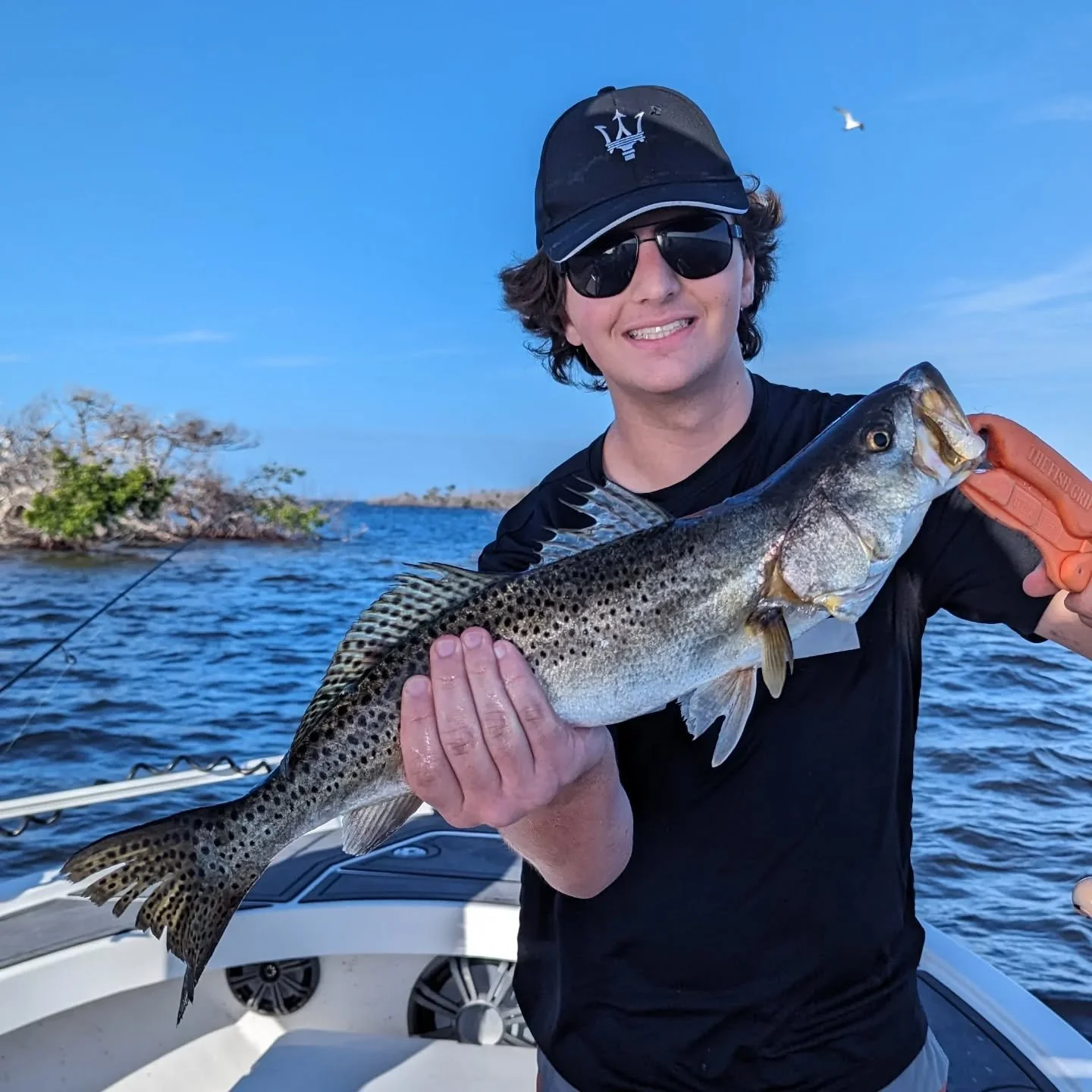
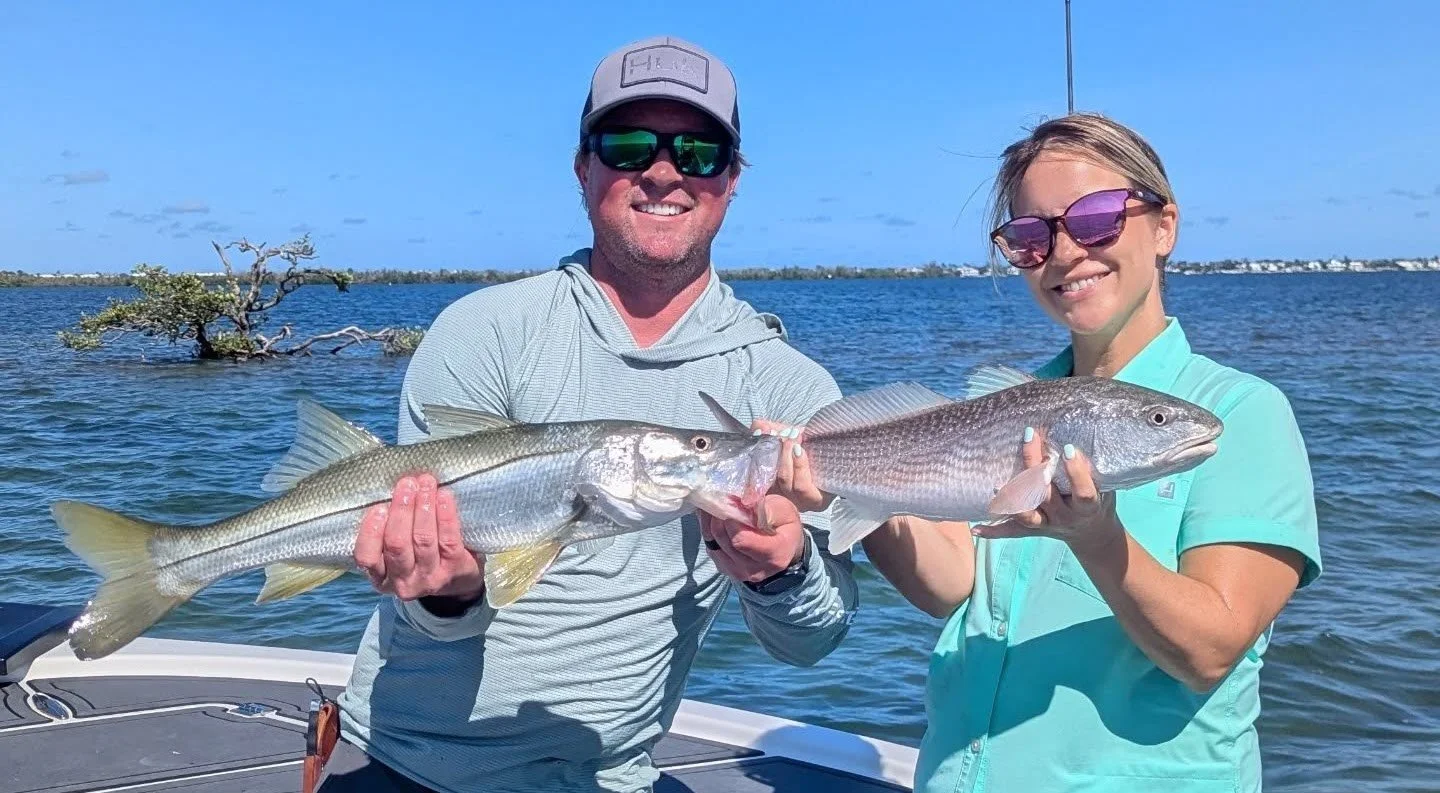
September fishing in Fort Myers, Sanibel, and Captiva is where late summer starts turning into fall. The water is still warm, afternoon weather still matters, and early starts still matter, but bait movement, redfish activity, nearshore structure fishing, and the first stronger fall patterns begin to change the rhythm of the fishery.
August fishing in Fort Myers, Sanibel, and Captiva is late-summer fishing with a simple operating rule: start early, fish moving water, and let the tide, heat, bait, and weather decide the day’s best plan. This is not the month for stubbornly grinding dead water because “it looked fishy.” Fish do not care about our feelings. Rude, but educational.
This is one of the strongest months of the year for anglers choosing between Fort Myers tarpon fishing charters, inshore snook-redfish-trout trips, shark-focused big-fish action, and calm-morning nearshore reef and wreck fishing charters. July can produce trophy-class fish and high-volume mixed action, but the best results come from planning around tide stage, bait location, wind, and storm timing.
June fishing in Fort Myers is a summer fishery built around heat management, tide timing, bait concentration, and target-specific trip selection. This guide is for anglers choosing between inshore, nearshore, tarpon, and shark trips with KingFisher Charters. Operational impact is simple: June can produce high catch rates and trophy-class targets, but success depends on fishing early, matching the tide, and choosing the right water before afternoon heat and storms reduce efficiency.
May is the transition from broad spring inshore fishing to full big-fish season in Fort Myers, Sanibel, and Captiva. Tarpon becomes the primary headline, snook and redfish feed harder around mangroves and passes, trout remains the highest-volume inshore option, and nearshore structure adds mackerel, tripletail, sharks, snapper, and permit when wind allows. This guide solves trip selection, tide selection, and tackle selection for anglers who want May patterns defined before they leave the dock.
April fishing in Fort Myers is when Southwest Florida’s spring bite goes from “starting to build” to “fully online.” Water temperatures stabilize, bait becomes more consistent across the flats and around structure, and the inshore game starts feeling less like a winter puzzle and more like a spring pattern you can repeat all day. If you want variety, steady action, and real trophy potential, April is one of the best months to book.