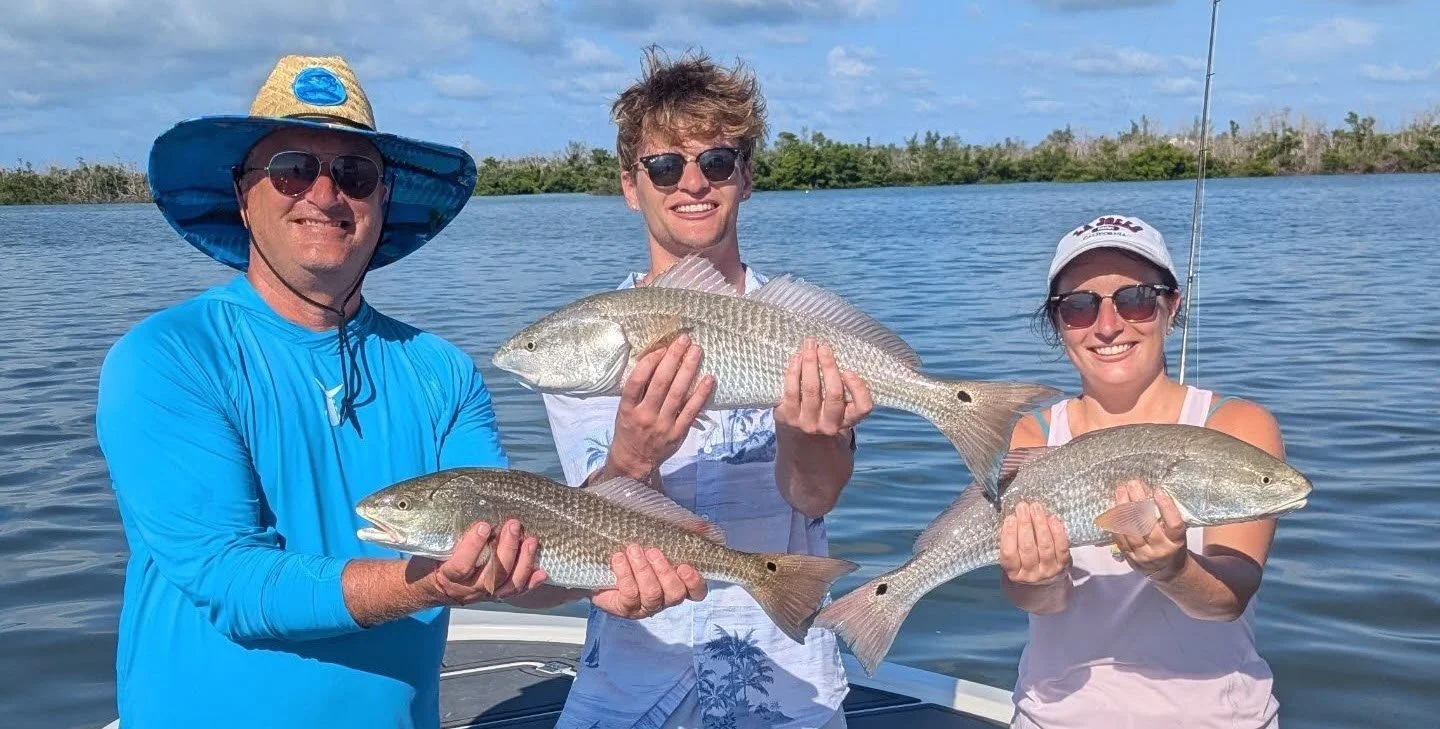
October fishing in Fort Myers, Sanibel, and Captiva brings the fall pattern into focus. Redfish become a priority along mangrove shorelines and shallow flats, snook feed around current and structure, and schools of bait can draw mackerel and other predators into nearshore waters. Between the back bays, passes, grass flats, and Gulf reefs, there are several productive ways to build a fall fishing trip.
Our Fort Myers inshore fishing charters offer opportunities for redfish, snook, spotted seatrout, and mangrove snapper, while calm Gulf conditions create options outside the beaches. The best choice depends on what your group wants to catch and what the weather, tide, and water conditions allow that day.
The transition from September fishing around Fort Myers, Sanibel, and Captiva is gradual rather than immediate. Early October can still feel like summer. As cooler nights and the first fronts arrive, fish may change locations, feeding windows can shift, and yesterday’s productive shoreline may need a different approach.
What Changes in October?
October adds more variety to the daily fishing plan. During a warm stretch, early starts, shaded mangroves, and deeper grass remain useful. After a cooler night, the best opportunity may come later, when the tide begins moving and shallow water has had time to warm.
That makes October different from a simple summer schedule. Leaving at first light can still be productive, but the earliest departure is not automatically the best departure. Water movement, recent weather, and bait location deserve just as much attention.
| October Condition | What It Means for Fishing | Practical Adjustment |
|---|---|---|
| Warm early-month weather | Fish may continue using summer holding areas and feeding windows. | Start with moving water, shaded structure, and grass flats with nearby depth. |
| Cooling nights and passing fronts | Fish can shift between shallow feeding areas and deeper holding water. | Check nearby channels, potholes, and protected shorelines instead of forcing yesterday’s pattern. |
| Concentrated baitfish | Predators may gather around passes, shoreline points, and nearshore bait schools. | Watch for diving birds, bait showering at the surface, and fish working the edges of schools. |
| Changing wind and water clarity | Some shorelines become difficult to fish while others offer better visibility and boat control. | Choose water where a bait can be presented naturally and the boat can be positioned safely. |
| Calm Gulf windows | Reefs, wrecks, and open-water bait schools become practical options. | Consider a nearshore trip when both the outbound and return forecasts are favorable. |
Best Inshore Fish to Target in October
Redfish Along Mangroves, Oyster Bars, and Grass Edges
Redfish are a major part of fall fishing around Fort Myers, Sanibel, and Captiva. October can bring opportunities to find groups of fish working shallow flats, mangrove edges, oyster bars, and shoreline drains. Some fish travel in schools, while others remain scattered around smaller pieces of productive habitat.
The most useful clues are often subtle. A push of water along a shoreline, bait moving away from a mangrove point, or a fish tipping down over a sandy opening can reveal more than a long stretch of otherwise attractive water.
Higher water gives redfish access to shoreline cover. As the tide falls, nearby drains, potholes, and edges become more important. Successful redfish fishing around Fort Myers starts with understanding those movements and getting a bait into position before the fish pass through.
Live shrimp, pilchards, pinfish, and cut bait are useful options. Weedless soft plastics and spoons allow anglers to cover grass and shoreline transitions. When fish are visible, a quiet approach and a cast ahead of their path are usually better than dropping a bait directly into the middle of the group.
Snook Around Shoreline Structure and Moving Water
October snook fishing is about following the transition between summer feeding areas and more protected inshore habitat. Fish can remain around passes and beach-adjacent water during warm conditions, while mangrove shorelines, docks, creek mouths, and river-connected areas become increasingly important as temperatures change.
Current helps narrow the search. A mangrove point with bait moving past it, a dock beside a channel, or a creek mouth draining into deeper water gives snook a place to hold while food comes within reach.
Live pilchards and pinfish are effective around structure. Paddletails, suspending plugs, and topwater lures can also produce when matched to the water depth and the way fish are feeding. After a noticeable temperature drop, a slower presentation near cover may work better than an aggressive retrieve across open water.
Local snook harvest also changes in October. The Charlotte Harbor management region includes the Fort Myers, Sanibel, and Captiva area, and its fall harvest season opens October 1 under the current rules. The full October 2026 regulation summary appears below.
Spotted Seatrout Over Grass and Sandy Potholes
Spotted seatrout are a useful target for anglers who enjoy light tackle and a more active style of fishing. Grass flats, sandy openings, channel edges, and changes in bottom depth all deserve attention.
Rather than choosing one depth for the entire month, work through the available habitat. During warmer conditions, deeper grass may be productive. On a mild fall day, trout may feed across shallower grass and potholes. A sharp cooling period can move fish toward deeper water again.
Live shrimp beneath a float offers a straightforward presentation for beginners. Soft-plastic jigs and small baitfish imitations let experienced anglers search efficiently. Once fish are located, repeat the productive drift without running the boat directly across the same water.
Trout require careful handling. Keep unwanted fish in the water when practical, handle them gently, and release them promptly.
Mangrove Snapper and Structure-Based Action
Mangrove snapper provide another option around docks, bridges, mangrove roots, and rocky structure. They are especially useful when a group wants a mix of species rather than spending the entire trip waiting for one particular fish.
Small live baits and shrimp presented close to cover can draw quick strikes. The challenge is getting the presentation near the structure without allowing a hooked fish to disappear back into it.
Sheepshead may also become part of the catch around pilings and hard structure as conditions cool. October is a transition month rather than a guarantee of the strongest winter sheepshead bite, but shrimp fished close to the bottom can produce opportunities when these fish are present.
October Nearshore Fishing Off Sanibel and Captiva
When the Gulf cooperates, our nearshore reef and wreck fishing charters add a different dimension to October. Instead of working mangroves and grass flats, the focus shifts toward reef structure, hard bottom, and schools of bait outside the passes.
The distinction matters when choosing a trip. Nearshore fishing offers access to different species and presentations, but it also depends more heavily on wind and sea conditions. A clear sky does not necessarily mean a comfortable Gulf.
Spanish Mackerel and Fall Kingfish Opportunities
Spanish mackerel can provide fast action when bait schools gather near the beaches, passes, or reefs. Diving birds and bait scattering across the surface are useful signs, especially when predators are feeding just below the school.
Small spoons, jigs, and live baitfish can all work. The goal is to present something that fits the size of the available bait while keeping the boat outside the feeding activity.
King mackerel may also become an option as the fall movement develops. Their arrival and concentration depend on water conditions and forage, so an October date alone does not guarantee a kingfish trip. When the right bait and fish are present, however, nearshore fishing can offer powerful runs and a very different fight from the inshore species.
Snapper, Jacks, and Reef Structure
Nearshore structure can hold snapper, jacks, and other species even when surface feeding is limited. Fishing close to the bottom and presenting a bait higher in the water column are different approaches, and the better choice depends on where the fish are holding.
Grouper may also be encountered, but catching a grouper and legally keeping it are separate questions. In October 2026, gag grouper harvest is closed in local Gulf state waters and adjacent federal waters. Other grouper species have their own rules, so the trip should never be planned around a general assumption that all grouper are open.
Are Tarpon Still an Option in October?
Tarpon can remain part of the fall fishery during warm conditions, particularly where bait gathers around passes, channels, and river mouths. These opportunities are different from the main spring and summer migration.
Rather than treating tarpon as an automatic October target, discuss the recent pattern before choosing a dedicated trip. Productive tarpon fishing after summer depends on finding the right combination of fish, bait, current, and suitable weather.
For a group whose main goal is variety, an inshore trip generally offers more ways to adjust than a trip built entirely around one late-season tarpon opportunity.
Choosing the Right October Fishing Charter
A four-hour inshore trip is a practical starting point for families, first-time anglers, and visitors who want fishing to be part of a larger vacation day. It provides time to work several areas without committing the group to a full day on the water.
A six-hour inshore trip gives anglers more time to follow a changing tide, move between habitats, or spend longer pursuing redfish and snook. More time does not guarantee more fish, but it provides additional flexibility when the bite develops later than expected.
Our nearshore trips are available in six- and eight-hour formats. These are worth considering for anglers interested in reef fishing, mackerel, and a different mix of species when Gulf conditions are suitable.
When comparing our fishing charter options, tell us whether your priority is family-friendly action, a particular species, artificial-lure fishing, or the possibility of taking home a legal catch. That helps us recommend a trip that fits your group.
October 2026 Fishing Regulations to Know
October includes several important harvest changes. The summary below reflects published regulations checked September 25, 2026. Rules can change, so confirm the regulations that apply to your trip date, species, and fishing location before keeping fish.
| Species | October Harvest Status | Key Details |
|---|---|---|
| Snook | The Charlotte Harbor region’s fall harvest season runs October 1 through November 30. | The slot is 28 to 33 inches total length, with a daily limit of one fish per person. Applicable license, permit, and for-hire restrictions also apply. Check the current Florida snook regulations. |
| Gag grouper | Recreational harvest closes October 1, 2026, in local Gulf state waters and adjacent federal waters. | Do not plan an October trip around keeping gag grouper. Review the current Florida grouper regulations for species-specific requirements. |
| Flounder | Harvest closes October 15 through November 30. | Flounder caught during the closure must be released. Review the Florida flounder regulations for limits and legal methods outside the closure. |
The 2026 federal gag grouper season announcement sets the federal closure at 12:01 a.m. local time on October 1. Moving farther offshore does not create an October recreational gag harvest opportunity.
Redfish, spotted seatrout, snapper, and other species have separate size, bag, and possession limits. We plan harvest opportunities around the rules in effect for the trip rather than treating every fish caught as a fish that can go in the cooler.
October Weather, Tides, and Trip Timing
October often brings more comfortable fishing conditions, but it is not automatically the end of summer weather. The National Weather Service’s Southwest Florida rainy-season guidance places the usual end of the rainy season around mid-October, with considerable variation from year to year.
Thunderstorms and tropical weather can still affect plans. Passing fronts introduce another consideration: changing wind direction, rougher open water, and a temperature drop that may alter the bite.
For that reason, we consider the whole trip rather than just the forecast at departure. A manageable morning run does not help if the return becomes unsafe. Protected inshore water may offer an alternative to the Gulf, but it is not a substitute for postponing a trip when conditions are unsuitable.
Tide timing also deserves attention. A productive shoreline needs enough water for fish to reach it, and a current-fed dock or mangrove point may fish differently before and after the tide turns. In October, matching the right habitat to the available water is often more useful than insisting on one departure time for every trip.
What to Bring on an October Charter
October calls for a little more flexibility in clothing than midsummer. A cool boat ride can turn into a warm afternoon, and a light layer is useful even when the forecast looks pleasant.
- Sun protection: Bring polarized sunglasses, a hat, sunscreen, and comfortable sun-protective clothing.
- A light layer and suitable footwear: Pack a lightweight jacket or rain shell and wear shoes that are comfortable on a boat.
- Personal essentials: Bring snacks, any preferred drinks, necessary medication, and a water-resistant place for your phone or camera.
Our fishing trips include fishing licenses, rods, reels, bait, tackle, ice, and bottled water. Tell us about any special needs or preferences while planning the trip so we can discuss the best arrangements before departure.
October Fishing FAQs
Is October a good month to fish Fort Myers, Sanibel, and Captiva?
Yes. October offers opportunities for redfish, snook, spotted seatrout, mangrove snapper, and other inshore species. Suitable Gulf conditions can also create opportunities for mackerel and reef fishing. The strongest plan depends on the recent weather, available bait, and tide.
What is the best time of day to fish in October?
Early morning remains useful during warm weather, but it is not always the best window. After a cool night, a later period with moving water can be productive. We consider the tide and recent conditions when discussing departure times.
Can you keep snook in October around Sanibel and Captiva?
Under the current 2026 rules, the Charlotte Harbor management region is open to snook harvest from October 1 through November 30. Fish must meet the 28- to 33-inch total-length slot, and all bag-limit, licensing, permit, and for-hire requirements apply.
Can you keep gag grouper in October 2026?
No. Recreational gag grouper harvest closes October 1, 2026, in the Gulf waters relevant to these trips. Other grouper species have different regulations, so accurate identification and current rules are essential.
Is an October charter suitable for children and beginners?
Yes. An inshore trip can be planned around the group’s experience and comfort. A four-hour trip is a useful starting point for many families, while a longer trip gives anglers more time to work different areas and tide stages.
Should we choose inshore or nearshore fishing?
Choose inshore fishing for shoreline targets, light-tackle variety, and more options inside the islands. Consider nearshore fishing for reefs, wrecks, and open-water bait schools when the marine forecast is suitable. Your target species and comfort with open-water conditions should guide the decision.
Plan Your October Fishing Trip With KingFisher Charters
October offers more than one way to enjoy Southwest Florida fishing. A day can revolve around redfish on a shallow shoreline, snook feeding beside structure, trout over the grass, or mackerel outside the passes. The important part is choosing a trip that fits the conditions and the people on board.
We offer Fort Myers fishing charters for visitors and local anglers, along with trips serving guests planning Sanibel Island fishing adventures and fishing charters around Captiva. Our fishing reports and seasonal guides provide additional background as you decide what kind of day you would enjoy.
Plan your October trip with Captain Pat. Contact KingFisher Charters, call 239-839-1802, or email kfcharterco@gmail.com to discuss dates, target species, trip length, and availability.