
Winter in Fort Myers is not an off season for fishing. It is a shift in how and where fish feed. Cooler but still mild Gulf temperatures concentrate bait and gamefish in predictable places, from the mangrove edges of Pine Island Sound to the nearshore reefs and wrecks off Sanibel, Captiva, and Fort Myers Beach. Species like sheepshead, redfish, trout, snook, and black drum slide into inshore channels and creeks, while snapper, grouper, mackerel, permit, and jacks stack up on nearby structure.
For anglers booking with KF Charter Co, winter is one of the most reliable times to plan both inshore and nearshore reef and wreck trips. The air is comfortable, boat traffic is lighter than in peak spring and summer, and the fish are focused on food instead of long spawning migrations.
How Winter Conditions Shape The Bite
Water Temperature, Clarity, and Fish Behavior
As cold fronts move across Southwest Florida, surface temperatures in bays and along the beaches drop several degrees. Fish react in a few consistent ways. They look for stable water, shelter, and easy meals. That often means deeper potholes on the flats, dredged channels, creek mouths, and man made structure such as docks and seawalls inshore, along with rock piles, reefs, and wrecks just offshore.
Winter also tends to bring clearer water to the region. Lower algae growth and fewer summer thunderstorms reduce runoff, which improves visibility on inshore flats and on the nearshore reef line. This clarity helps with sight fishing on sunny days inside the islands and makes predators more willing to roam above wrecks and ledges to chase bait.
Tides, Fronts, and Wind
Most winter bites around Fort Myers are tightly linked to tide and weather. Incoming tides pull slightly warmer Gulf water into the bays, lifting bait and predators onto edges and channel mouths. Outgoing tides sweep shrimp and small crabs off the flats, creating ambush lanes around oyster bars, docks, and bridge pilings.
Cold fronts do two things anglers have to respect. Ahead of a front, falling pressure and prefrontal chop can spark aggressive feeds both inshore and nearshore. After a front, bright skies, north winds, and a sharp drop in temperature can push fish tight to structure or into deeper holes until conditions moderate again. On those post front days, an inshore trip tucked behind islands or mangroves is often more comfortable than running to the outer reef line.
Best Time of Day and Trip Length
During mid winter cold spells, the most consistent bite usually falls between late morning and mid afternoon, once the sun has warmed shallow water and pushed baitfish and crustaceans into motion. On milder winter stretches, first light can be excellent along oyster bars and seawalls inside, while the middle of the day can be ideal for nearshore reef and wreck fishing when the sea state allows a comfortable run.
KF Charter Co offers half day and longer trips that fit this pattern well. Inshore trips can be timed to key tide windows, and nearshore reef and wreck trips are often planned for the calmest portion of the day based on wind and sea conditions.
Inshore Winter Fishing Around Fort Myers
Key Inshore Habitats: Mangroves, Bays, and Creeks
The inshore waters around Fort Myers, Sanibel, Captiva, and Pine Island Sound form a maze of grass flats, oyster bars, mangrove islands, and winding creeks. In winter, these areas act like radiators and windbreaks. Dark mud or shell bottom warms quickly under the sun. Mangroves, canal banks, and causeway pilings break up the breeze and concentrate bait.
Productive winter inshore zones include shallow flats that drop into slightly deeper troughs, creek mouths where flow pours out of the backcountry, docks and seawalls along the Caloosahatchee River and residential canals, and bridge pilings and passes that funnel tide between the islands and the Gulf. Together, these areas give winter fish exactly what they want: warmth, current, structure, and food.
Primary Inshore Winter Species
Sheepshead thrive in cooler water and are one of the signature winter inshore targets in Fort Myers. They cluster around docks, bridge pilings, rock piles, and oyster bars, picking crabs, barnacles, and shrimp off the structure. Their picky, bait stealing bite rewards anglers who pay attention and stay tight to their rigs.
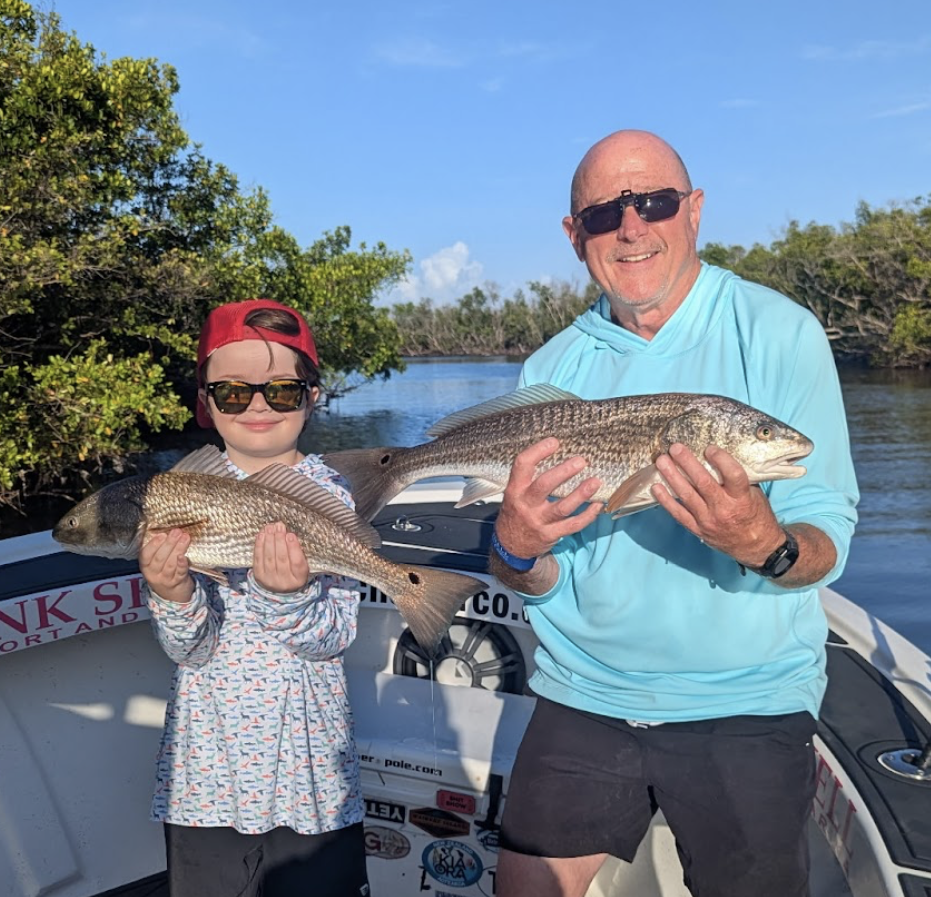
Redfish remain active throughout winter, often sliding onto sun warmed shorelines and potholes when the tide and light are right. Baitfish, shrimp, and crabs concentrate on those same edges, so a well placed live shrimp or soft plastic along a mangrove point or oyster edge can produce strong, drag pulling strikes.
Spotted seatrout favor deeper grass flats, channels, and drop offs when temperatures fall. Larger winter trout commonly hold around the intersection of grass and sand, or in depressions adjacent to flats where they can slide shallow to feed and deep to rest. Under popping corks or on slow sinking soft plastics, their strikes can stay steady for long stretches in January and February.
Snook are more sensitive to cold but never disappear from the system. They shift to deeper, more stable water in canals, rivers, and back bays, often near warm water outflows or dark bottom shorelines. On warming trends, they may slide up to sandbars and mangrove edges to feed, especially on shrimp and smaller finfish, making winter a good time to target quality fish in lower numbers.
Black drum, often found alongside sheepshead, add another heavy, bottom oriented target in winter. They respond well to shrimp or small crabs presented near bottom structure and deeper holes along river channels and in sounds like Matlacha Pass.

Techniques and Tackle for Winter Inshore Trips
Winter inshore fishing around Fort Myers generally rewards finesse and patience. Live shrimp are arguably the most consistent bait of the season, effective for sheepshead, redfish, trout, drum, and even cold season snook. Many Florida winter specialists fish shrimp on simple knocker rigs, split shot rigs, or under corks to keep baits in the strike zone without moving them too quickly.
Artificial lures still produce, but slower presentations are critical. Soft plastics, jigs, and suspending plugs worked with minimal movement and long pauses imitate chilled baitfish. Light to medium spinning outfits keep casts accurate and fights fun while still having enough power to handle larger drum or snook around structure. KF Charter Co rigs guests with purpose built inshore tackle so they can focus on learning the subtleties of the winter pattern rather than worrying about gear.
Nearshore Reef and Wreck Fishing in Winter
Where Nearshore Trips Fish in the Cooler Months
Nearshore reef and wreck trips with KF Charter Co target Gulf structure within a reasonable run of the passes off Fort Myers, Sanibel, and Captiva. These include artificial reefs, ledges, and sunken debris fields that rise off otherwise flat bottom and pull in bait and predators from miles around.
In winter, these nearshore spots can fish extremely well. While some classic warm season inshore gamefish focus on conserving energy, cool water specialists and structure oriented species line up on the reef edges and wreck corners. Anchoring or controlled drifting over these features puts baits in front of steady numbers of hard fighting, great eating fish.
Nearshore Winter Species Around Fort Myers
Nearshore reef and wreck trips in the winter months often focus on a mixed bag built around snapper and grouper. Lane and mangrove snapper, along with legal size red or gag grouper when seasons allow, make up a large share of winter bottom catches. These fish hold tight to rock and relief, picking off shrimp, crabs, and baitfish swept across the structure.
Sheepshead also migrate to Gulf structure in impressive numbers, turning some winter reef trips into near nonstop action on light tackle. On the same pieces, anglers may encounter Atlantic spadefish, grunts, and porgies, all of which keep rods bent and fillet tables busy.
Higher in the water column, Spanish mackerel and, at times, king mackerel sweep along the reef lines following clouds of glass minnows and pilchards. Free lined live baits or fast stripped spoons off the stern tap into this seasonal action. Cobia, permit, and tripletail round out the nearshore cast, especially as winter edges toward spring and water temperatures creep upward.
KF Charter Co nearshore reef and wreck offerings highlight grouper, snapper, permit, sheepshead, jacks, and mackerel, all of which can show up on a single winter trip when conditions line up.

Techniques for Winter Reef and Wreck Trips
Most winter nearshore fishing around Fort Myers centers on bottom fishing. Captains anchor or hover upcurrent of a reef or wreck and send baits down on knocker rigs, fish finder rigs, or simple jig heads. Shrimp and cut bait excel for snapper, sheepshead, and reef dwellers, while larger live baits or strips are reserved for grouper and cobia.
Vertical jigs and bucktails add another option when fish hang just off the bottom or around wreck edges. On days when mackerel and other pelagics are active, a second rod can be dedicated to free lined live bait or metal lures fished higher in the water column. KF Charter Co supplies the rods, reels, tackle, and terminal rigs that match the day’s structure and target list, so guests can quickly adapt to what is biting.
Winter Species Calendar for Fort Myers Inshore and Nearshore Trips
Across the heart of winter in Fort Myers, patterns shift with each month. The table below gives a high level view of what visiting anglers can expect on KF Charter Co inshore and nearshore reef and wreck charters.
| Month | Inshore Focus Species | Nearshore Reef & Wreck Focus Species | Seasonal Notes |
|---|---|---|---|
| December | Redfish, spotted seatrout, sheepshead, black drum, snook in deeper canals and channels | Lane and mangrove snapper, mixed grouper, early sheepshead, Spanish mackerel on bait schools | Cooling water concentrates fish on structure and in deeper troughs. Stable, comfortable weather is common. |
| January | Peak sheepshead, trout, redfish, black drum in creeks, rivers, and channel edges | Heavy sheepshead presence on reefs and wrecks, lane and mangrove snapper, legal grouper where open, Spanish mackerel, occasional cobia | Coolest water of the year. Structure and tide windows matter most, but action can be fast when fronts line up. |
| February | Larger trout on deeper edges, redfish on warming flats, snook waking up in rivers and canals, continued sheepshead and drum | Consistent snapper and grouper, strong sheepshead bite, more regular cobia, permit, and tripletail on nearshore structure | Slight warm up and longer days trigger more roaming behavior and open up both inshore sight fishing and nearshore mixed bag trips. |
Planning Your Winter Charter With KF Charter Co
Choosing Between Inshore and Nearshore
For many visitors, the first winter planning question is whether to book an inshore or nearshore trip. Inshore charters stay within protected bays, sounds, and rivers, usually in water from a few feet deep to mid channel depth. They are ideal when a front leaves choppy seas outside, when fishing with younger kids, or when you want plenty of light tackle action on redfish, trout, sheepshead, and drum.
Nearshore reef and wreck trips push Gulf side to natural and artificial structure in deeper water while still staying relatively close to land. These trips suit anglers who want a shot at snapper and grouper dinners, hard fighting mackerel and jacks, and the possibility of larger fish like cobia or permit, all while experiencing more of the Gulf environment. When winter conditions are settled, seas often stay comfortable enough for families and mixed skill groups on these runs.
KF Charter Co runs both styles regularly through the winter and can recommend one over the other based on the latest bite, weather, and your group’s comfort level.
What To Bring On A Winter Charter
KF Charter Co provides fishing licenses, top quality rods and reels, bait, tackle, and a cooler with ice and bottled water on both inshore and nearshore reef and wreck trips. To make the most of your day, guests only need to bring a few personal items of their own.
- Light layers for cool mornings and warmer afternoons
- Soft soled shoes with good grip
- Polarized sunglasses to help spot fish and structure
- Sun protection including hat, buff, and reef safe sunscreen
- Any preferred snacks or drinks
- A charged phone or camera for photos
- Appropriate seasickness remedies if you are prone to motion sensitivity on nearshore runs
What To Expect On Board
A winter charter with KF Charter Co starts with a detailed plan based on tide, wind, and the current bite. For inshore trips, that might mean working a sequence of creeks, flats, and channels as the tide changes, shifting from sheepshead and drum on structure to trout and redfish on warming edges. For nearshore reef and wreck trips, the day could begin with bottom fishing for snapper and grouper, then adjusting to a surface bite if mackerel, jacks, or cobia appear around the boat.
Fish are cleaned and bagged at the end of the trip when regulations and seasons allow, so you can go straight from the dock to the grill or a local restaurant that cooks your catch.

Ready To Fish The Winter Waters Of Fort Myers?
Winter around Fort Myers, Sanibel, and Captiva is one of the most reliable times to experience both the subtlety of inshore fishing and the steady pull of nearshore reef and wreck action. Cooler water concentrates gamefish, comfortable air temperatures make full days on the water easy, and the variety of species available means every trip can be tailored to your goals, from family fun to filling the cooler.
To take advantage of this season, book your winter inshore or nearshore reef and wreck charter with KF Charter Co. Captain Pat’s local knowledge, flexible trip options, and fully equipped boat make it simple to match the right day, tide, and location to the kind of fishing you want to experience. Visit our contact page to reserve your dates and step into Fort Myers winter fishing at its best.