August fishing in Fort Myers, Sanibel, and Captiva is late-summer fishing with a simple operating rule: start early, fish moving water, and let the tide, heat, bait, and weather decide the day’s best plan. This is not the month for stubbornly grinding dead water because “it looked fishy.” Fish do not care about our feelings. Rude, but educational.
For anglers choosing between Fort Myers inshore fishing charters, nearshore reef and wreck fishing charters, and late-summer tarpon and shark fishing trips, August can produce excellent action. The best trips are built around shorter feeding windows, shaded shorelines, deeper grass, pass current, mangrove snapper around structure, and calm-morning opportunities outside the beaches.
Compared with July fishing in Fort Myers, Sanibel, and Captiva, August usually puts even more emphasis on timing. The heat is still strong, afternoon storms are still part of the daily planning puzzle, and fish often feed best when current, bait, and lower-light conditions overlap.
August Fishing Conditions Around Fort Myers, Sanibel, and Captiva
August is still a summer fishery, but it begins leaning toward the first hints of the fall transition. Bait remains important, snook are still active around passes and mangroves, redfish begin feeling more consistent around shoreline edges, trout hold better in deeper grass, mangrove snapper stay aggressive around structure, and sharks remain a strong big-fish option.
| August Variable | Typical Pattern | Best Fishing Adjustment |
|---|---|---|
| Summer heat | Shallow water warms quickly after sunrise. | Start early and shift toward shade, current, deeper grass, bridges, docks, or nearshore structure as the sun rises. |
| Moving tide | Current concentrates bait around passes, mangrove points, oyster bars, docks, bridges, and grass edges. | Build the trip around the best incoming or outgoing tide instead of simply choosing the longest time on the water. |
| Bait concentration | Pilchards, threadfins, pinfish, shrimp, crabs, and small baitfish drive most of the August bite. | Stay mobile until bait is visible, marked, or being pushed by current. |
| Afternoon storms | Late-summer thunderstorms can build quickly across Southwest Florida. | Favor morning departures and allow the captain to adjust range based on radar, wind, and sea state. |
| Boat traffic | Popular beaches, passes, and channels can get busy. | Use quiet approaches, longer casts, and less obvious water when pressure builds. |
| Nearshore conditions | Calm mornings may open up reefs, wrecks, hard bottom, and beach-adjacent shark water. | Choose nearshore plans when the marine forecast allows safe and efficient positioning. |
The practical August pattern is this: fish the highest-percentage water first, then adjust before the bite fades. Around Fort Myers, Sanibel, and Captiva, that often means starting with mangrove edges, passes, docks, grass flats, oyster bars, or beach structure while the light is low and the tide is moving.
- Primary inshore targets: Snook, redfish, spotted seatrout, mangrove snapper, jack crevalle, ladyfish, black drum, and mixed-bag species.
- Primary nearshore targets: Mangrove snapper, grouper species when open and legal, permit, mackerel, jacks, sharks, and other reef or wreck species.
- Primary big-fish targets: Sharks and late-season tarpon opportunities when conditions line up.
- Primary trip-planning risk: Starting too late and spending the best tide window fighting heat, traffic, slow water, or building storms.
Best August Inshore Fishing Patterns
Catch-and-Release Snook Around Passes, Beaches, and Mangroves
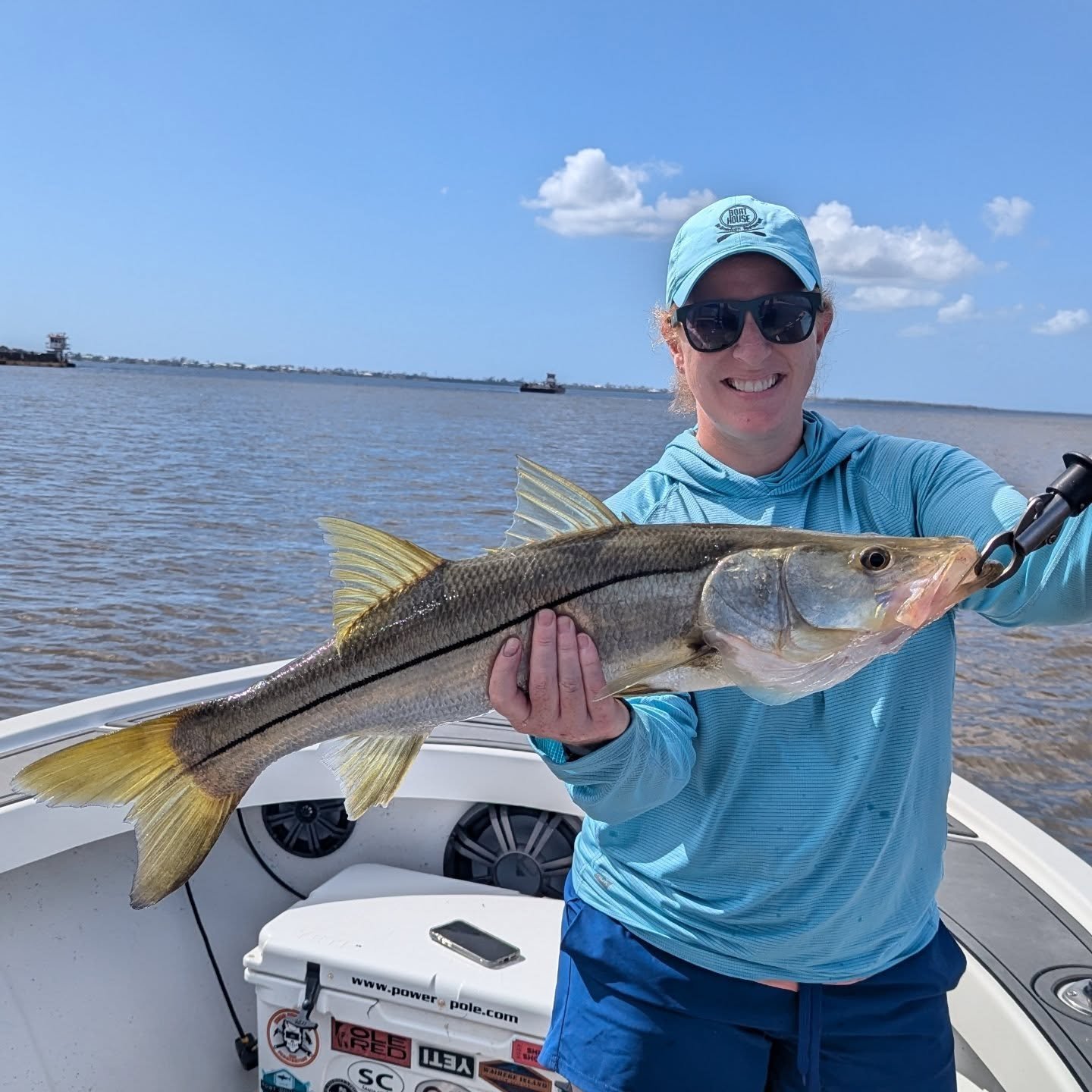
Snook are one of the main August targets around Fort Myers, Sanibel, and Captiva. They may hold around beach troughs, pass edges, mangrove points, docks, bridges, oyster bars, and current seams where bait gets swept into feeding lanes.
Low light is important. Early mornings and moving tides create the best windows, especially when bait is present. Beach snook may sit close to shore, while mangrove and dock fish often tuck tight to shade. That means accurate casts matter more than long hero casts into fishless sunlight. Hero casts look cinematic. Fish often find them hilarious.
August snook fishing should be planned as catch-and-release. Snook regulations are regional, and local harvest rules around Fort Myers, Sanibel, Captiva, and the surrounding Southwest Florida waters should always be checked before keeping fish. Review the current Florida snook regulations before every trip.
Redfish on Mangrove Edges, Oyster Bars, and Draining Water
August is a strong month to pay attention to redfish, especially as the late-summer pattern begins setting up the fall fishery. Redfish may feed along mangrove shorelines, oyster bars, potholes, grass edges, creek mouths, and sandy cuts where bait moves with the tide.
Higher water can push redfish tight to mangroves and shoreline cover. Falling water can pull those same fish toward drains, edges, potholes, and the first available depth change. The best approach is usually quiet boat positioning, accurate casts, and patience. Redfish can tolerate warm water, but they still do not appreciate a boat arriving like a drumline falling down a staircase.
Live shrimp, pinfish, cut bait, and small baitfish can all work well. Artificial options such as weedless paddletails, spoons, shrimp imitations, and soft plastics can also produce when covering shoreline or grass transitions.
Redfish harvest rules can change, and for-hire trips have specific restrictions for captain and crew. Review the current Florida redfish regulations before keeping any redfish.
Spotted Seatrout on Deeper Grass and Pothole Chains
Spotted seatrout remain a dependable August target when the plan shifts away from overheated shallow flats and into deeper grass, pothole chains, channel edges, and areas with steady water movement.
For family groups and newer anglers, live shrimp under a popping cork is one of the most reliable ways to create action. For more experienced anglers, soft plastics, twitch baits, and small jigs can cover water efficiently and help locate active fish.
The key is making controlled drifts instead of repeatedly driving over productive water. Once trout are found, reset upcurrent and work the same zone carefully. The fish are there because the water has the right depth, food, oxygen, and current. The boat does not need to audition as a lawn mower.
Spotted seatrout rules are now managed by region in Florida, so anglers should review the current Florida spotted seatrout regulations before harvesting fish.
Mangrove Snapper Around Docks, Bridges, Mangroves, and Nearshore Structure
Mangrove snapper are one of the most useful August targets in Southwest Florida. They feed around docks, bridges, mangrove roots, channel markers, rock piles, nearshore reefs, wrecks, and hard bottom. When the flats slow down in the heat, snapper can keep rods bent and provide excellent light-tackle action.
Small live baits, shrimp, and cut bait presented close to structure are hard to beat. The trick is staying alert. Mangrove snapper hit quickly and immediately try to get back into cover. Even smaller fish have the attitude of something much larger and professionally offended.
For anglers who want a trip with both steady bites and the possibility of quality fish, snapper are a major reason August can be such a productive month.
Snapper rules vary by species and water type. Review the current Florida snapper regulations before keeping fish.
Nearshore Fishing in August
When Gulf conditions allow, August can be a strong month for nearshore fishing off Fort Myers, Sanibel, and Captiva. Reefs, wrecks, hard bottom, ledges, and bait schools can hold snapper, grouper species, permit, Spanish mackerel, jack crevalle, sharks, and other hard-pulling fish.
Nearshore trips are especially condition-dependent in August. Calm mornings can open up productive water, while wind, storms, or rough seas can make protected inshore fishing the smarter choice. This is where having multiple charter options matters. The best day is not always the longest run. Sometimes the ocean is wearing its spicy pants.
The broader guide to nearshore summer fishing off Florida’s Southwest Coast explains why summer bait movement and reef activity can make this zone so productive.
Grouper Season Awareness and August Prep
August is an important planning month for grouper anglers, but current rules matter. Gulf gag grouper harvest is closed through August 31, 2026 under current FWC regulations, with September dates becoming the next major planning window. Other grouper species may have different rules, minimum sizes, bag limits, and federal-water restrictions.
That means August nearshore trips should be planned with current regulations in mind. Some grouper encounters may be catch-and-release depending on species and season, while legal harvest opportunities depend on the exact fish, water, and rule set in effect that day.
Before any grouper-focused trip, review the current Florida grouper regulations. Anglers fishing federal waters should also confirm applicable NOAA rules before keeping reef fish.
Tarpon and Shark Fishing in Late Summer
August is past the strongest part of the classic tarpon migration, but tarpon can still be part of the late-summer picture when bait, tide, and weather align. Fish may show near passes, beaches, river mouths, deeper channels, and areas where food is concentrated.
The more reliable big-fish option in August is often shark fishing. Sharks remain active in warm water and can provide serious power for anglers who want a big pull without waiting all morning for one perfect tarpon shot.
Tarpon and shark fishing trips are best for anglers who understand that big-fish fishing is different from action-style inshore fishing. The rewards can be enormous, but the approach requires patience, heavier tackle, careful handling, and respect for the conditions.
Tarpon are managed as a catch-and-release fishery in Florida. Large tarpon must remain in the water unless an angler is pursuing an eligible record with the proper tag. Review the current Florida tarpon regulations before targeting tarpon.
Shark rules also require careful attention because many species are protected or have strict handling requirements. Review the current Florida shark regulations before planning any shark-focused trip.
Choosing the Right August Charter
The best August charter depends on the group, the weather, the tide, and the target species. KingFisher Charters offers several trip styles around Fort Myers, Sanibel, and Captiva, which makes it easier to match the plan to the day instead of forcing one pattern through poor conditions.
| Trip Goal | Best Charter Style | Why It Works in August |
|---|---|---|
| Steady action and variety | Inshore fishing charter | Snook, redfish, trout, snapper, jacks, ladyfish, and mixed-bag species provide flexible options in protected water. |
| Family-friendly fishing | Shorter inshore trip | Calmer water, less travel time, and more frequent bites are usually better for kids and first-time anglers. |
| Bigger fish and reef action | Nearshore reef and wreck trip | Calm mornings can produce snapper, grouper encounters, permit, mackerel, jacks, sharks, and structure-based action. |
| Big-fish fight | Tarpon and shark trip | Late-summer tarpon may still be possible, while sharks remain a strong warm-water target. |
| Vacation flexibility | Custom fishing charter | The plan can be adjusted around weather, tides, skill level, and whether the group wants fishing, sightseeing, or a mix of both. |
August Fishing by Area
Fort Myers
Fort Myers fishing charters have strong August options because the area offers access to mangroves, grass flats, oyster bars, docks, bridges, channels, the Caloosahatchee system, and nearby Gulf water when conditions allow.
Inshore trips can focus on snook, redfish, trout, snapper, and mixed action. Nearshore trips become attractive when the forecast opens the door for reefs, wrecks, and hard bottom.
Sanibel Island
Sanibel Island fishing charters are especially useful in August because the island sits near beaches, passes, grass flats, mangrove shorelines, and nearshore structure. That variety gives the captain room to adjust when wind, water clarity, or storms change the plan.
Snook, redfish, trout, snapper, sharks, mackerel, jacks, and other species can all be part of the August picture depending on the day’s conditions.
Captiva
Captiva fishing charters offer access to productive inshore and nearshore water, including mangrove edges, passes, channels, beach zones, and structure. August fishing around Captiva often rewards early starts, clean water, visible bait, and careful boat positioning.
For anglers staying on Captiva, this is a strong month to choose a flexible charter instead of locking into one species no matter what the weather and tide are doing.
What to Bring on an August Fishing Charter
August is hot, bright, humid, and storm-aware. Guests should dress for sun, water, and changing conditions.
- Polarized sunglasses: Helpful for seeing bait, bottom changes, fish movement, and glare lines.
- Hat and sun-protective clothing: Lightweight long sleeves are useful in August sun.
- Lotion sunscreen: Apply before the trip and bring extra. Spray sunscreen can make boat decks slippery.
- Drinks and snacks: Hydration matters during summer fishing.
- Rain jacket: Summer showers can move through quickly.
- Phone or camera: Keep it protected from water, salt, and general boat-chaos gremlins.
- Personal medication: Bring anything you may need while away from the dock.
KingFisher Charters includes fishing licenses, rods, reels, bait, tackle, ice, and bottled water on fishing trips. Trips can be customized based on the group’s goals, skill level, and the day’s conditions.
August Weather and Safety
August fishing requires flexible planning because Southwest Florida is still deep in rainy season. Morning trips are often the best fit because storms are more likely to become a problem later in the day. Wind, lightning, rain, and sea state can all affect whether the best plan is inshore, nearshore, or big-fish focused.
Safety always comes first. If conditions make one plan less practical, the smarter move is to adjust the trip style instead of forcing the original idea. The fish will still be there after the atmosphere finishes throwing furniture.
For general seasonal context, review the National Weather Service overview of Florida thunderstorm season.
August Fishing FAQs
Is August a good month to fish Fort Myers, Sanibel, and Captiva?
Yes. August can be excellent for snook, redfish, trout, mangrove snapper, sharks, jacks, ladyfish, mackerel, and nearshore species. The key is fishing early, planning around moving water, and staying flexible with weather and sea conditions.
What is the best time of day to fish in August?
Early morning is usually the best window. The temperatures are more manageable, fish are often more active, and storms are less likely to disrupt the plan. A strong tide can extend the bite later into the morning.
Can you keep snook in August around Fort Myers and Sanibel?
August snook fishing should be treated as catch-and-release in local waters unless current FWC rules say otherwise. Snook regulations are regional, and the Fort Myers, Sanibel, and Captiva area falls under rules that require careful attention to seasonal closures. Always check FWC before harvesting snook.
Are tarpon still around in August?
Tarpon can still be around in August, but the most dependable part of the migration is usually earlier in summer. Late-summer tarpon fishing depends heavily on bait, tide, water clarity, and weather. Shark fishing is often the more reliable big-fish option this time of year.
Is August good for redfish?
Yes. Redfish can be productive around mangrove edges, oyster bars, grass flats, drains, potholes, and shoreline structure. Late summer also begins setting up the stronger fall redfish pattern.
Is nearshore fishing worth it in August?
Yes, when the Gulf is calm enough. Nearshore reefs, wrecks, and hard bottom can produce snapper, grouper encounters, permit, mackerel, jacks, sharks, and other species. If wind or storms make nearshore water less practical, protected inshore fishing is usually the better plan.
What is the best August trip for families?
A shorter inshore trip is usually the best August option for families, kids, and first-time anglers. It offers calmer water, less travel time, more shade and structure options, and better flexibility when weather changes.
What does KingFisher Charters provide?
Fishing trips include licenses, rods, reels, bait, tackle, ice, and bottled water. Guests should bring sun protection, snacks, extra drinks, and any personal items needed for a summer morning on the water.
Book an August Fishing Charter With KingFisher Charters
August fishing around Fort Myers, Sanibel, and Captiva rewards smart timing. The best plan is usually built around early starts, moving water, visible bait, and the flexibility to choose between inshore, nearshore, tarpon, shark, and mixed-bag fishing based on the day’s conditions.
KingFisher Charters offers inshore fishing trips, nearshore reef and wreck trips, tarpon and shark trips, and custom fishing experiences around Fort Myers, Sanibel Island, Captiva, and the surrounding Southwest Florida waters.
For more seasonal planning, compare this guide with our warm weather fishing trip guide and our article on late-summer inshore fishing on Florida’s southwest shoreline.
Ready to plan your August trip? Contact KingFisher Charters, call 239-839-1802, or email kfcharterco@gmail.com to discuss tides, targets, trip length, and availability with Captain Pat.