July fishing in Fort Myers, Sanibel, and Captiva is peak summer fishing with a very clear operating rule: fish early, fish moving water, and match the trip to the conditions instead of trying to bully the Gulf into cooperating. Tiny Neptune tantrums are real, especially when heat, tides, bait, and afternoon storms all start arguing at once.
This is one of the strongest months of the year for anglers choosing between Fort Myers tarpon fishing charters, inshore snook-redfish-trout trips, shark-focused big-fish action, and calm-morning nearshore reef and wreck fishing charters. July can produce trophy-class fish and high-volume mixed action, but the best results come from planning around tide stage, bait location, wind, and storm timing.
For anglers comparing the seasonal progression, June fishing in Fort Myers, Sanibel, and Captiva is the lead-in to this pattern. July keeps many of the same species active, but the fishing window becomes more concentrated around sunrise, stronger current, shaded shorelines, deeper grass, passes, and structure.
July Fishery Conditions and Trip Selection
July is not a random-action month. The fishery divides into four practical choices: tarpon and shark trips, inshore fishing charters, nearshore reef and wreck trips, and family-style mixed-bag mornings. Each option can be excellent, but each one depends on a different combination of tide, weather, bait, and group ability.
| July Variable | Typical Pattern | Fishing Impact | Best Adjustment |
|---|---|---|---|
| Summer heat | Warm inshore water and intense sun after mid-morning. | Shallow fish feed best early, then slide toward shade, current, or depth. | Start early and prioritize the first strong feeding window instead of stretching the day into slow water. |
| Tide movement | Moving water concentrates bait around passes, mangrove edges, oyster bars, grass edges, docks, and bridges. | Snook, redfish, trout, tarpon, snapper, and sharks position more predictably when current is active. | Build the trip around the best incoming or outgoing tide rather than simply choosing the longest possible trip. |
| Afternoon weather | July sits inside Southwest Florida’s rainy season, with heat-driven storms more likely later in the day. | Lightning, wind shifts, and heavy rain can shorten the useful fishing window. | Favor morning departures and let the captain adjust range based on the forecast. |
| Bait concentration | Pilchards, threadfins, pinfish, shrimp, crabs, and small baitfish drive most summer feeding. | Predators hold near forage, not just near pretty-looking water. | Stay mobile until bait is visible, marked, or pushed by current. |
| Gulf conditions | Calm mornings may open beach tarpon lanes, shark water, reefs, wrecks, and hard bottom. | Nearshore and tarpon options improve when wind and sea state allow safe, efficient positioning. | Match the charter style to the marine forecast instead of forcing one plan through bad water. |
The main July decision is trip type. Anglers who want maximum size should consider tarpon or shark-focused trips. Anglers who want consistent casting and variety should choose inshore fishing. Anglers who want reef structure, snapper, mackerel, permit, grouper opportunities when regulations allow, and hard-pulling mixed action should watch for calm Gulf windows and choose nearshore fishing.
- Best trophy target: Tarpon, with sharks as a major summer big-fish option.
- Best inshore targets: Snook, redfish, spotted seatrout, mangrove snapper, jacks, and ladyfish.
- Best nearshore targets: Snapper, permit, mackerel, jacks, sharks, and grouper when regulations allow.
- Best timing: Early morning through late morning, especially when tide movement overlaps with bait activity.
- Best weather hedge: Protected mangrove shorelines, river edges, docks, bridges, and deeper inshore water when open Gulf conditions become less reliable.
High-Percentage July Fishing Patterns
July rewards anglers who fish specific patterns instead of sampling random water and hoping a fish wanders by out of pity. Each pattern below solves a different part of the Fort Myers, Sanibel, and Captiva summer fishery.
Tarpon and Shark Trips Around Passes, Beaches, and Deep Travel Lanes
July remains one of the most important tarpon months in Southwest Florida. Large fish may move along beach lanes, stage near passes, follow bait through San Carlos Bay, or slide into deeper channels where current and forage line up. These are not casual “cast anywhere” fish. They are tide, lane, and boat-positioning fish.
The best tarpon approach is a controlled presentation ahead of moving fish or through a current seam where fish are already traveling. Live crabs, threadfins, pilchards, mullet, and other natural baits can all play a role depending on the tide and how fish are feeding. When tarpon are rolling, the goal is to put the bait where the fish is going, not where it used to be. Chasing every surface roll is how good tarpon trips turn into boat-powered confetti.
Sharks are a natural July backup and sometimes a primary target. They use many of the same bait-rich zones as tarpon, especially around passes, channels, beaches, and nearshore structure. For anglers who want a heavy pull without committing the whole morning to one tarpon bite, shark action can be a smart summer plan.
Tarpon are managed as a catch-and-release fishery in Florida. Fish over 40 inches must remain in the water unless an angler is pursuing an eligible state or world record with a tarpon tag. Review the current Florida tarpon regulations before fishing. Shark rules also require careful species identification, proper tackle, and release practices, so anglers should review the current Florida shark regulations before targeting sharks.
Anglers focused on big summer fish should start with KingFisher’s Fort Myers, Sanibel, and Captiva tarpon fishing charters.
Mangrove Snook and Redfish on Summer Inshore Water
July inshore fishing is strongest when snook and redfish are targeted around cover, current, and shade. Productive zones include mangrove points, dock lines, oyster edges, potholes, creek mouths, pass edges, and shoreline current breaks. Higher water lets fish push tight to mangrove roots and flooded edges. Falling water pulls those same fish toward drains, sandy cuts, potholes, and the first available depth change.
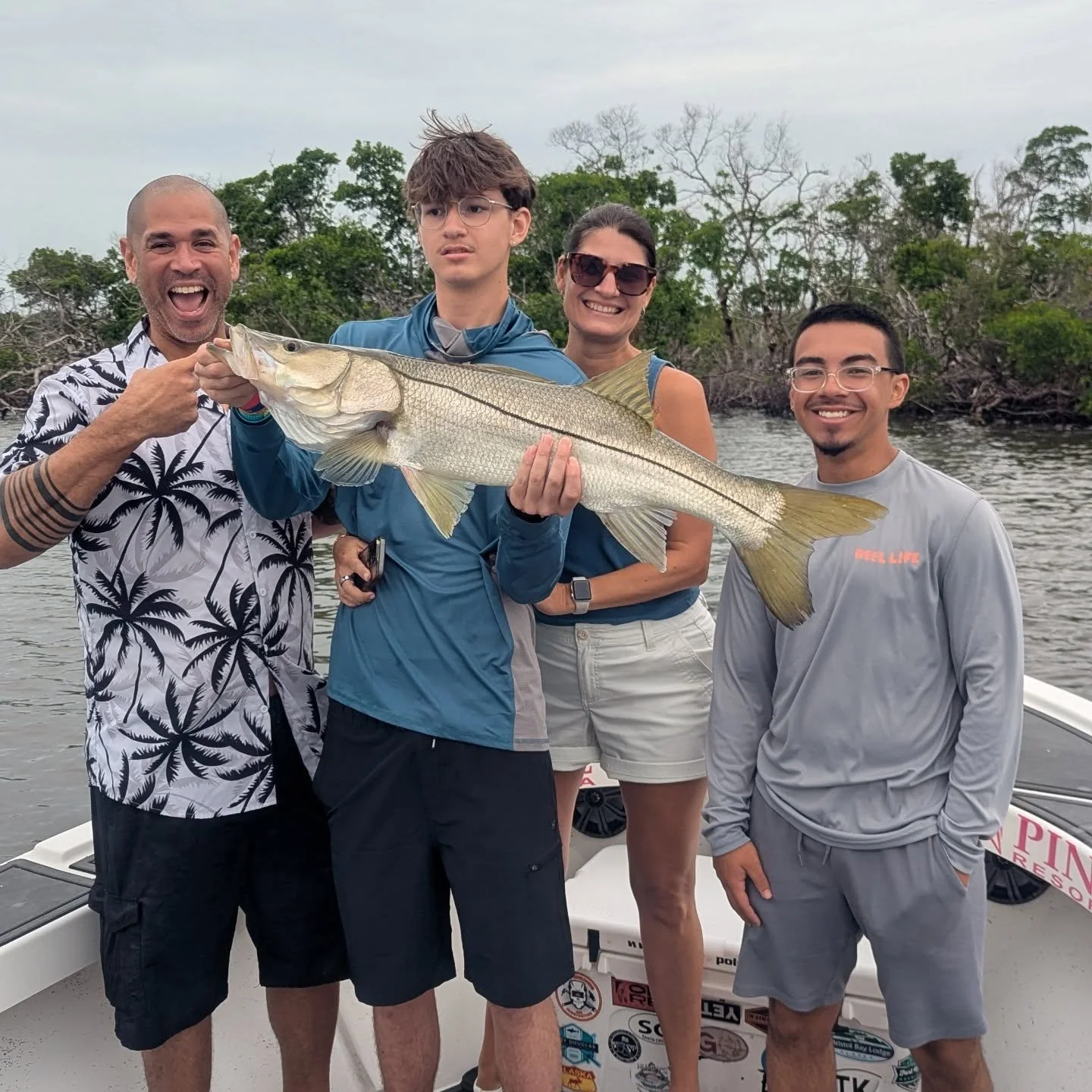
Snook are especially active in summer, but July harvest is closed in the local management region around Fort Myers, Sanibel, Captiva, and the Caloosahatchee system. That makes July snook fishing a catch-and-release program. Use enough tackle to land fish efficiently, keep handling short, and release fish quickly in warm water. Review the current Florida snook regulations before every trip.
Redfish can be more forgiving than snook, but they still reward quiet boat control and accurate casts. Live pilchards, shrimp, pinfish, cut bait, weedless soft plastics, and spoons can all work when placed near the right edge. The important part is the edge itself: shade, current, oysters, mangrove roots, sand holes, or grass transitions. Redfish are not magical copper coins scattered randomly across the bay. They are little current accountants, and they like food delivered efficiently.
For anglers who want a deeper local redfish breakdown, read the Fort Myers redfish fishing guide. For a full inshore trip built around snook, redfish, trout, snapper, and mixed action, start with KingFisher’s Fort Myers inshore fishing charters.
Grass-Flat Trout, Snapper, and Inshore Slam Action
Spotted seatrout remain one of the best July targets when the plan shifts away from overheated shallow water and toward deeper grass, sand potholes, channel-adjacent flats, and steady current. Trout fishing is often the numbers game in July, especially for families, newer anglers, and groups that want frequent bites.
The most efficient trout program is a controlled drift across mixed grass and potholes. Live shrimp under popping corks, small live baits, soft plastics on light jigheads, and twitch baits can all produce. Once bites show up in a specific depth or bottom transition, repeat that line instead of driving across the flat and turning the fishery into a blender. Boats are useful. Boat chaos is just marine jazz with consequences.
Mangrove snapper become increasingly important in July around docks, bridge pilings, channel edges, mangrove roots, rocks, and nearshore structure. They are a great add-on when trout scatter, snook tuck too deep into cover, or heat makes the open flats less productive. Small live baits, shrimp, and cut bait fished close to structure can create steady action.
Anglers interested in checking off the classic snook, redfish, and trout combination should also read KingFisher’s guide to summer inshore slam fishing in Ft. Myers.
Nearshore Reefs, Wrecks, and Beach Bait Pods
When July mornings are calm, nearshore fishing can be one of the best ways to combine action, variety, and heavier tackle. Reefs, wrecks, hard bottom, ledges, and bait pods off Fort Myers, Sanibel, and Captiva can hold snapper, permit, Spanish mackerel, jacks, sharks, and grouper when seasons allow.
Nearshore fishing is a structure and conditions game. The captain has to consider wind direction, sea state, current strength, water clarity, and bait marks before choosing whether to anchor, drift, or rotate between spots. When the Gulf lays down, the range of options expands quickly. When the Gulf gets sloppy, the smarter move may be to stay inside and fish protected inshore water.
Bottom rigs with shrimp, cut bait, and live baitfish work well around structure. Spoons, jigs, and free-lined baits can produce mackerel, jacks, and other fast-moving fish when bait is pushed higher in the water column. Permit and larger predators require more specific timing and presentation, but July gives enough variety that one nearshore trip can shift targets without wasting the whole morning.
Anglers who want reef, wreck, and hard-bottom action should review KingFisher’s nearshore fishing charters.
Family-Friendly Mixed-Bag Mornings
July can be excellent for families when the trip is designed around comfort, bite frequency, and protected water. A family-style July trip does not need to chase the biggest tarpon on the coast or run far offshore. Often, the best plan is an early inshore program built around trout, snapper, jacks, ladyfish, small sharks, and whatever else is chewing in the right water.
Shorter morning trips work well for children, newer anglers, and mixed-skill groups because the fishing happens before the strongest heat and most unpredictable weather. Live bait, simple tackle, and high-percentage areas help keep rods bent without turning the trip into a technical casting exam.
For a broader look at trip types beyond fishing, including shelling, dolphin watching, sightseeing, and custom excursions, visit the Fort Myers, Sanibel, and Captiva excursions page.
Best July Charter Type by Goal
| Trip Goal | Best July Charter Type | Why It Fits |
|---|---|---|
| Biggest possible fish | Tarpon fishing charter | July remains prime time for large tarpon, with shark action available when big predators are feeding around bait and current. |
| Most consistent casting and variety | Inshore fishing charter | Snook, redfish, trout, snapper, jacks, and ladyfish give anglers multiple ways to stay on fish as heat and tides change. |
| Reef, wreck, and structure action | Nearshore fishing charter | Calm mornings open snapper, mackerel, permit, jacks, sharks, and bottom-fishing opportunities around hard structure. |
| Kids, beginners, and relaxed action | Short morning inshore trip | Protected water, live bait, and mixed-bag targets create a comfortable trip with more bites and less technical pressure. |
| Vacation group with mixed interests | Custom fishing and sightseeing excursion | Some groups want fishing plus wildlife, shelling, dolphin watching, or a scenic ride through the islands. |
July Fishing Questions for Fort Myers Charters
Is July a good month to fish Fort Myers, Sanibel, and Captiva?
Yes. July is a strong fishing month for tarpon, sharks, snook, redfish, spotted seatrout, mangrove snapper, mackerel, jacks, and nearshore structure species. The best results come from morning trips, moving water, live bait, and choosing the right charter type for the daily conditions.
What fish are biting in July around Fort Myers?
July targets include tarpon, sharks, snook, redfish, spotted seatrout, mangrove snapper, Spanish mackerel, jacks, ladyfish, permit, and nearshore bottom fish. Tarpon and sharks provide the largest fish potential, while inshore trips usually provide the most flexible mixed action.
What is the best time of day to fish in July?
Early morning is usually the best July fishing window. Water temperatures are lower, boat traffic is lighter, bait is more active, and afternoon storms are less likely to interfere. A strong moving tide during the morning can extend the bite later into the day.
Are tarpon still around Fort Myers, Sanibel, and Captiva in July?
Yes. July remains inside the primary Southwest Florida tarpon window. Fish may be found around passes, beaches, bridge approaches, deep channels, and bait-rich travel lanes. Tarpon fishing is highly condition-dependent, so wind, tide, water clarity, and bait location determine whether it should be the primary plan.
Can anglers keep snook in July?
No. Snook harvest is closed in July in the local region around Fort Myers, Sanibel, Captiva, and the Caloosahatchee system. Snook can still be targeted with catch-and-release practices, but anglers should confirm current rules with the Florida Fish and Wildlife Conservation Commission before fishing.
Should I book inshore, nearshore, or tarpon fishing in July?
Book tarpon fishing when the goal is trophy-class fish and the group understands that big-fish trips can require patience. Book inshore fishing for snook, redfish, trout, snapper, and family-friendly variety. Book nearshore fishing when calm Gulf conditions make reefs, wrecks, and hard bottom practical.
Is July fishing good for kids and beginners?
Yes, especially on shorter morning inshore trips. Children and beginners usually do best when the plan focuses on steady action, live bait, protected water, and mixed-bag species instead of a long, technical tarpon program.
What should guests bring on a July charter?
Bring sun-protective clothing, polarized sunglasses, sunscreen, snacks, and any personal medication. KingFisher Charters provides fishing licenses, rods and reels, bait, tackle, and a cooler with ice and bottled water on fishing trips.
Plan a July Fort Myers Fishing Charter
July trips should be chosen by goal first, then refined by tide, weather, and group ability. A calm Gulf morning can make tarpon, sharks, reefs, and wrecks the right call. A windy or storm-prone day may favor protected inshore water around mangroves, grass flats, docks, bridges, and river edges. The fishery is flexible, but only if the plan is flexible too. Rigid fishing plans in July are how optimism gets sunburned.
KingFisher Charters offers fishing trips throughout Fort Myers, Sanibel, Captiva, Pine Island Sound, San Carlos Bay, the Caloosahatchee River area, and nearby Gulf waters. Anglers can compare the full lineup on the Fort Myers fishing charters, Sanibel Island fishing charters, and Captiva fishing charters pages.
For recent seasonal updates, browse the latest KingFisher Charters fishing reports and articles. To match July dates with the best tide window, target species, and trip format, call 239-839-1802 or reach out through the KingFisher Charters contact page.